
 Facebook
 X
X
 Pinterest
 Copy Link
By Shirley Mattam-Male | Top 1.5% Realtor® Nationwide
If you are relocating to Northern Virginia, you’ve likely noticed something confusing: you can find two homes with “Alexandria” addresses that look, feel, and cost nothing alike.
One is a 200-year-old brick rowhome on a cobblestone street; the other is a 1990s colonial with a two-car garage and a half-acre lot. This is because “Alexandria” is split into two distinct worlds: Historic Old Town (an independent city) and Greater Alexandria (a section of Fairfax County).
Choosing between them isn’t just about the house—it’s about your taxes, your commute, and your daily lifestyle. Here is the breakdown.
1. The Commuter’s Crossroad: DC, 395, and 495
In the DMV, we measure distance in “frustration units” (minutes) rather than miles.
-
Historic Old Town: You are geographically closer to DC (only 7–8 miles). Your primary route is the George Washington Parkway, a scenic, truck-free drive that delivers you straight to the 14th Street Bridge. You also have the King Street Metro (Blue/Yellow lines) and the Water Taxi.
- The Catch: Getting to I-495 or I-395 from Old Town requires navigating city stoplights, which can add 15 minutes to your trip before you even hit the highway.
- Greater Alexandria: This area is built for the “Power Commuter.” Neighborhoods like Kingstowne and Alexandria West sit right on the I-395 and I-495 (Beltway) interchange.
- The Advantage: You have immediate access to the I-395 Express Lanes, allowing you to bypass traffic for a fee. If you work at the Pentagon, Tysons, or in Maryland, Greater Alexandria is logistically superior.
2. The “Real” Cost: Property and Car Taxes (2026)
Because Old Town is its own city and Greater Alexandria is part of Fairfax County, your tax bill will look different.
| Tax Type | City of Alexandria (Old Town) | Fairfax County (Greater Alex) |
| Real Estate Tax | $1.135 per $100 | $1.1225 per $100* |
| Personal Property (Car Tax) | $5.33 per $100 | $4.57 per $100 |
| Parking Permits | Required ($55 – $250/year) | Rarely required |
Note: While Fairfax County’s base rate is lower, they often add a Stormwater Fee ($0.0325), bringing the effective rates nearly identical. However, the Car Tax is significantly higher in the City, which adds up if you own multiple vehicles.
3. Lifestyle: Waterfront Walkability vs. Suburban Space
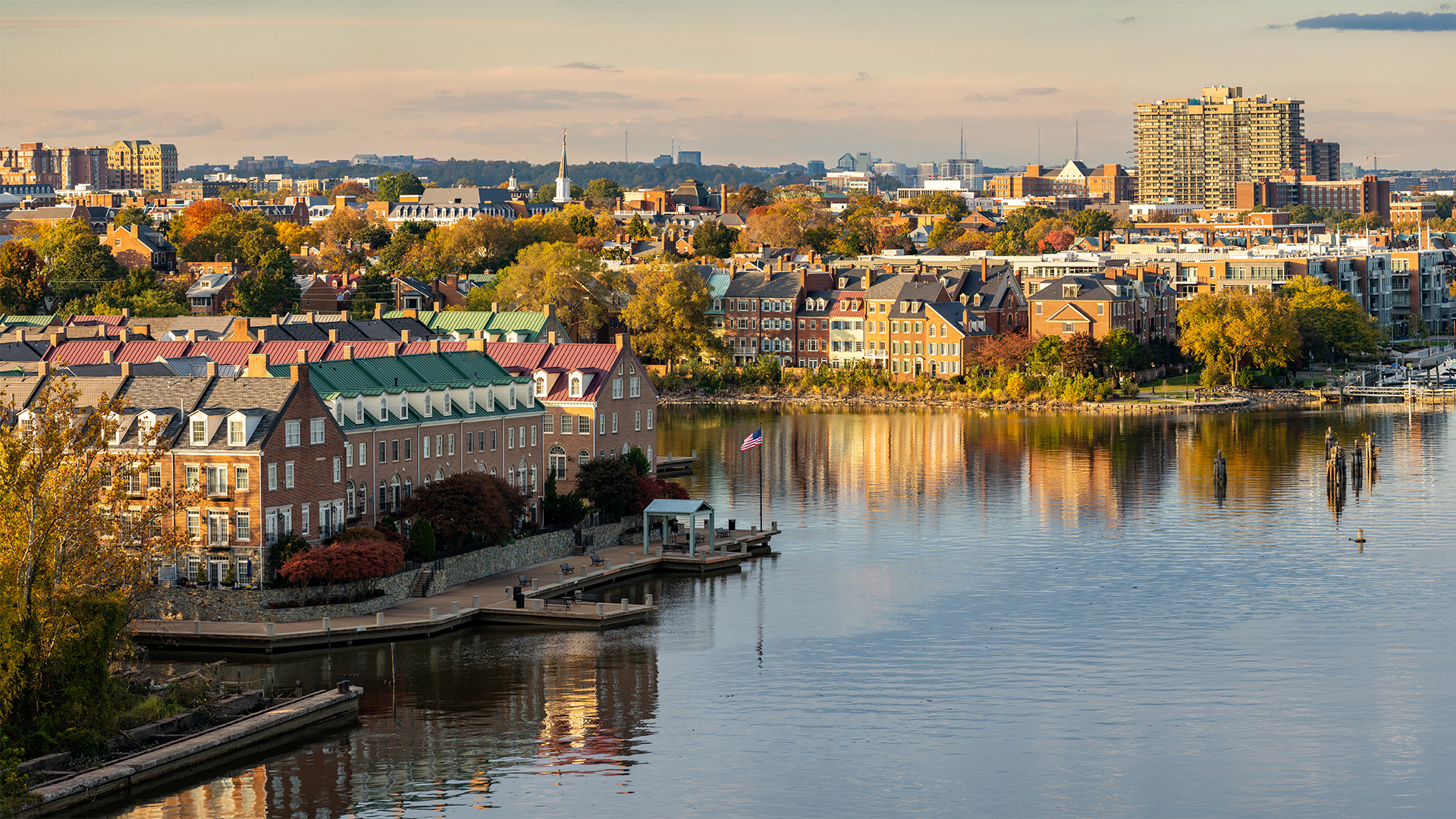
- The Old Town Vibe: Life here is “extroverted.” Your backyard is the Potomac Riverfront. You walk to dinner, the farmers’ market, and local boutiques. You trade a private yard for the charm of 18th-century architecture.
- Trade-off: Street parking is a competitive sport, and “historic charm” often means small closets and 200-year-old plumbing.
- The Greater Alexandria Vibe: Life here is “private.” You get the “traditional” American dream: a driveway, a fence for the dog, and a primary suite with a walk-in closet.
- Trade-off: You are car-dependent. Going to a “main street” for coffee usually requires a 10-minute drive to a shopping center rather than a stroll down a cobblestone path.
Which One Should You Choose?
- Pick Historic Old Town if: You want a high-density, urban-historic lifestyle. If you value being able to walk to a waterfront bar and want the shortest possible non-highway commute into DC, this is home.
- Pick Greater Alexandria if: You want more “bang for your buck.” If you need four bedrooms, a quiet cul-de-sac, and easy highway access to get to various parts of Northern Virginia, the Fairfax County side is your best bet.
Don’t Guess on Your Biggest Investment
Whether you’re chasing the history of Old Town or the space of Greater Alexandria, you need more than a search engine—you need a market expert. With my sellers averaging 104.5% of their list price, I specialize in helping clients identify which side of the Alexandria line will best serve their financial goals and their lifestyle.